By Wambui JL
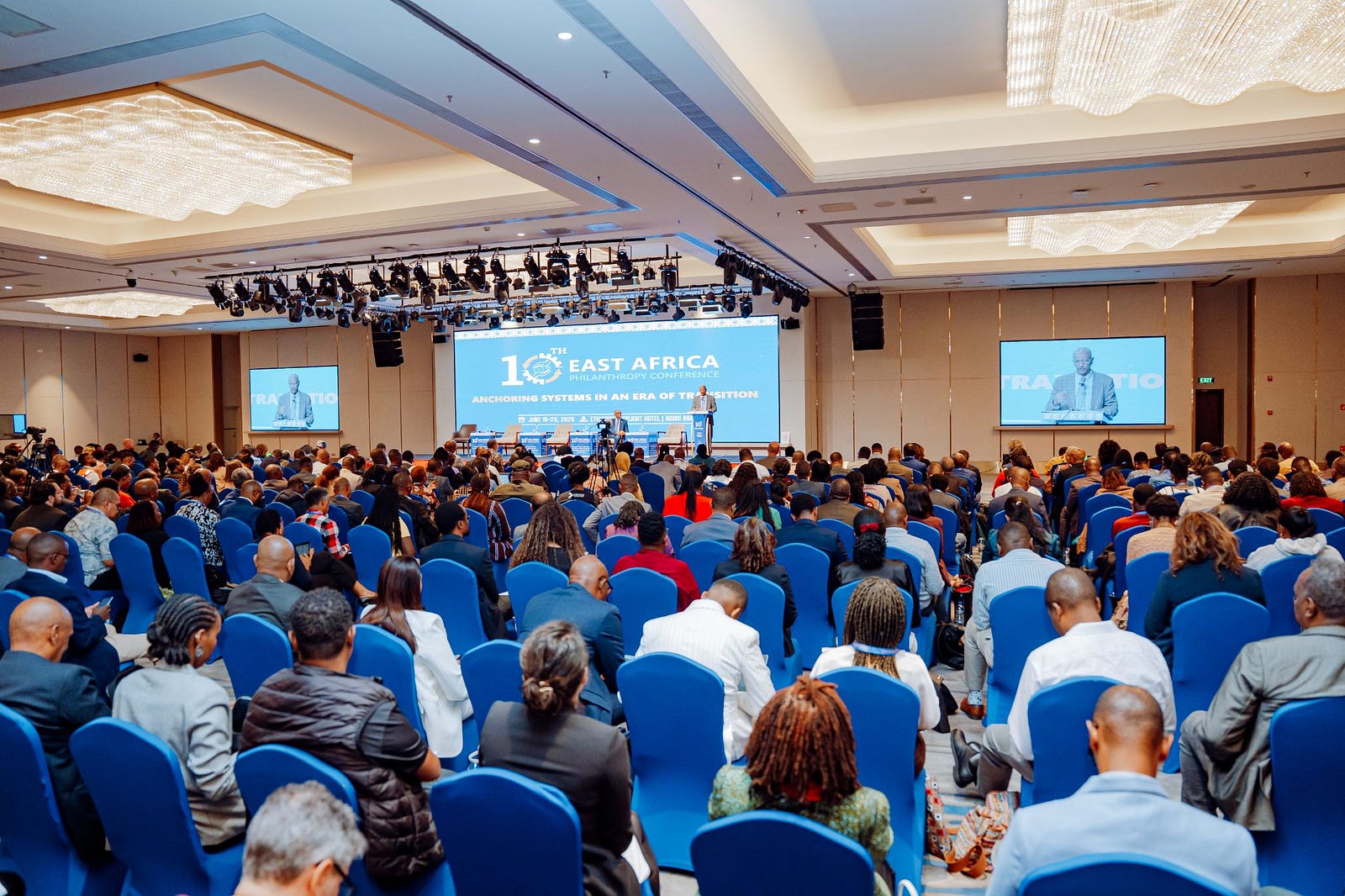
I am back in Nairobi after spending a week at the 10th East Africa Philanthropy Conference (EAPC) in Addis Ababa, Ethiopia. The electric vibe, strong coffee, and high-altitude air of Addis are still freshly coursing in my body as I process the weight of the conversations I was privileged to be a part of.
The gathering hosted over 600 leaders from 32 countries, and the atmosphere was about more than networking. It was about touching base with friends and allies about where we all landed post the structural shocks that fundamentally changed the global development sector.
The new reality on our minds post-July 1, 2025, when USAID effectively ceased operations and the global development sector absorbed its largest annual contraction on record, is that while foreign interventions and funding cycles eventually end, it is always the community and proximate leaders who remain to bear the risk and carry the mission. Forcing us to ask: When all is said and done, what do we need to do to anchor the systems that actually belong to us?
“The aid era is ending — by design. ODA has declined by 23.1% in real terms in one year. The five largest donors cut 95.7% of that decline. This is not a cycle — it is a structural shift. Africa cannot plan around aid that may not arrive.” The State of the Ecosystem: A TED Address by Dr. Tendai Murisa, Founder and Executive Director, SIVIO Institute.
For many, even as recently as the 9th EAPC in Kigali at the same time last year, it continues to feel like a cliff. However, for us at MAMA HOPE, these conversations were affirmations that the path we have set for ourselves, in the last 3 years, alongside our locally-led partners, is the right one.
Focusing on the Signal, Not the Noise
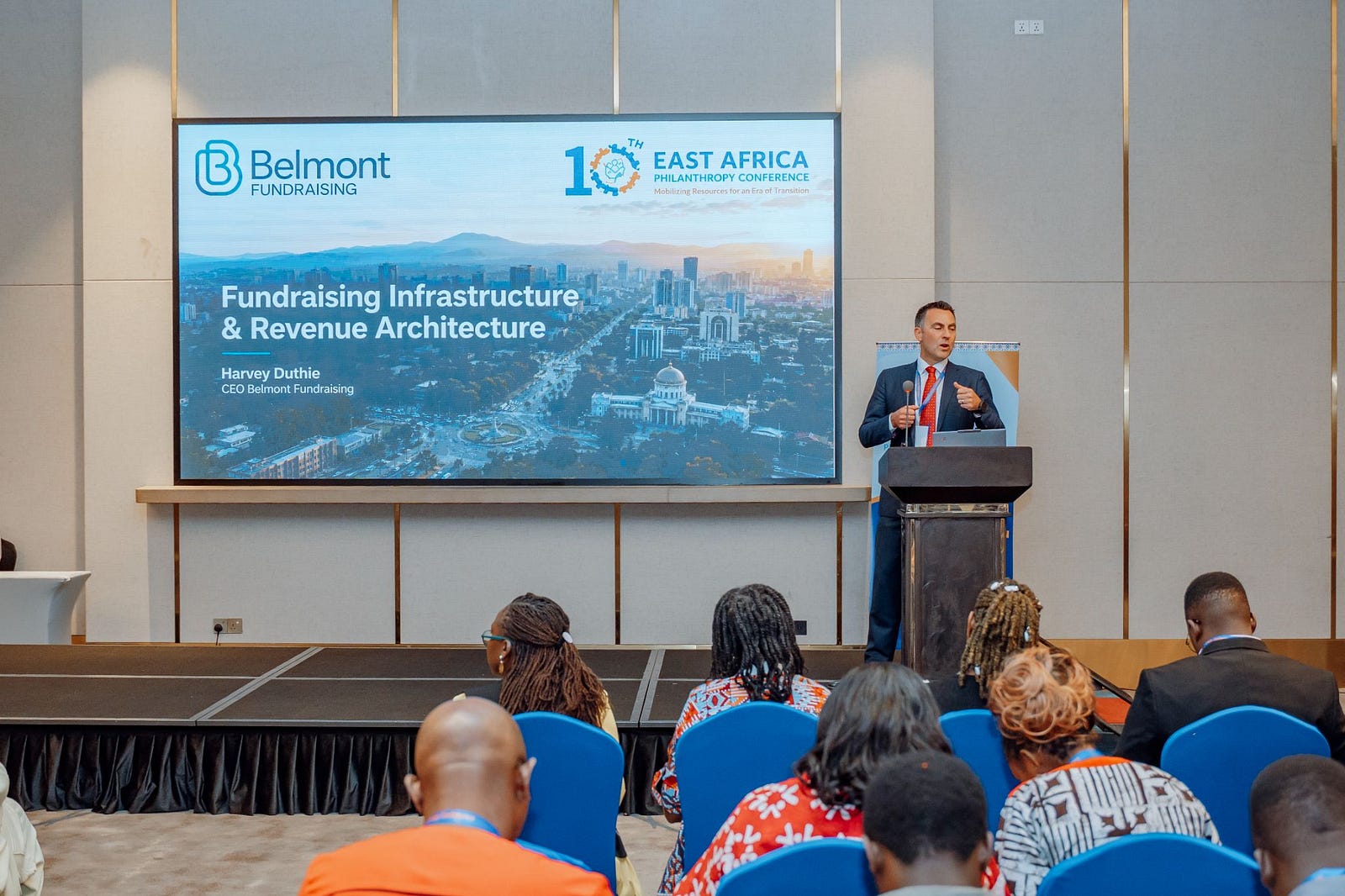
On day two, Harvey Duthie, CEO of Belmont Fundraising, shared a powerful anchor: Be Focused on the Signal, not the Noise, based on the book The Signal and the Noise: Why So Many Predictions Fail, But Some Don’t by Nate Silver. This quote provided the guide for what I would look for in the conference sessions.
In a room full of talk about funding gaps, the signal was clear: this isn’t just a lack of money; it’s a systems failure and an opportunity to build a system that works for us on the continent. The noise is the panic over disappearing official resources.
The signal is the massive shift in where capital actually sits today. Remittance inflows to Africa have surpassed Foreign Direct Investment (FDI) and Official Development Assistance (ODA) as the continent’s largest source of external financial flows, reaching $104.6 billion in 2024. Meanwhile, a $124 trillion intergenerational wealth transfer is putting resources into the hands of Millennials and Gen Z, who prioritize measurable social outcomes.
“The future is already speaking through signals, through shifts, through tensions, and through emerging patterns,” one delegate observed, capturing the spirit of a room that spent three days learning to read those signals together rather than wait for them to resolve on their own.
The Addis Commitment: Rethinking Philanthropic Systems by Dawit Taddele Dessie, Strategic Initiative and Sustainability, East Africa Philanthropy Network (EAPN).
Indeed, as the money shifts, at MAMA HOPE, we are building the anchors to meet it, and we identified four (4) signals that spoke to us:
Signal 1: Trusting the System Beyond Money
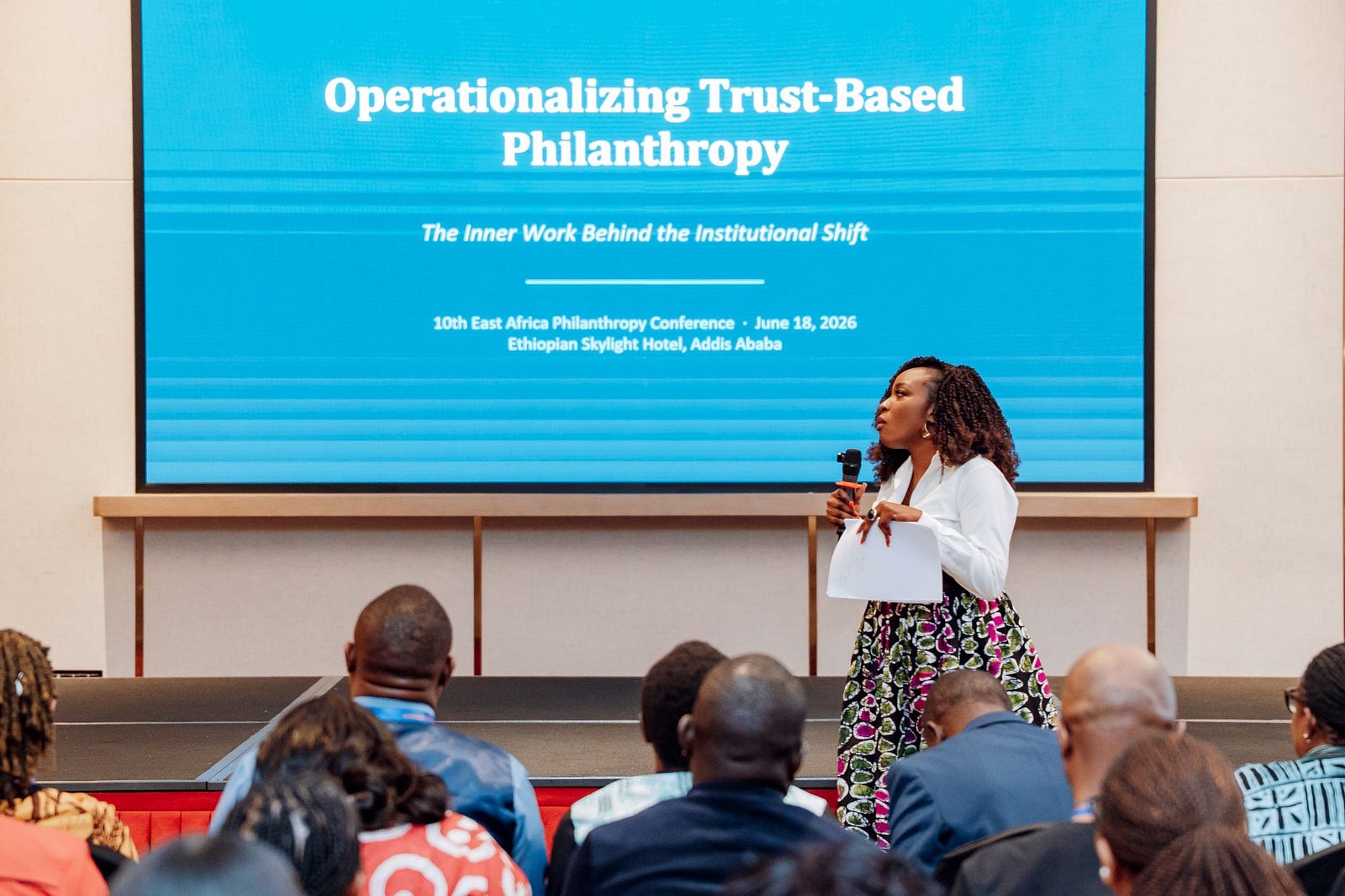
In Masterclass 5 titled The Inner Work of Trust-Based Philanthropy: Money Power and What it Actually Takes, we were asked to answer “What do you need from the people in this room… to be brave and honest today, instead of just polite?” Our group’s answer to the question was to leave money out of the room. Many in the sector hold power, control, and the definition of what success looks like because they hold the purse strings.
“One of the key anchors while we were curating this session as a team was that we wanted participants to really look inwards and ask themselves the hard question: What is their relationship with money, power, and control? Before we delve into operationalizing trust-based philanthropy. What does trust look like as a value, first before it becomes a practice?”
Sharon Afandi, Equitable Giving Officer at Segal Family Foundation
From 2008 to 2022, MAMA HOPE gave unrestricted funds to organizations we worked with while building their sustainability through income-generating projects. However, from 2023, we launched our Localization Development Accelerator (LDA) program and shifted how we invest in partnerships.
When we created the LDA program, we initially asked what organizations applying were interested in. Systems Building and/or Grants/Funding? Initially, we had the option for both, and that’s what many chose. But when we separated the option, we got more grant interest than system building. We would select organizations that showed interest in purely building their systems.
But why is the latter more of interest to us? We believed that when organizations have internally strong systems built for themselves, not the donor, they are likely to own it and are more likely to succeed. So we felt that when we removed the money, those interested in learning and working on their systems were the leaders we wanted to work with.
When we removed money from the equation, organizations were able to clearly see other resources and assets available to them. In a survey conducted last year by MAMA HOPE in partnership with Warande, we found that 95.2% of organizations surveyed were interested in capacity-strengthening support, even if funding wasn’t tied to it.
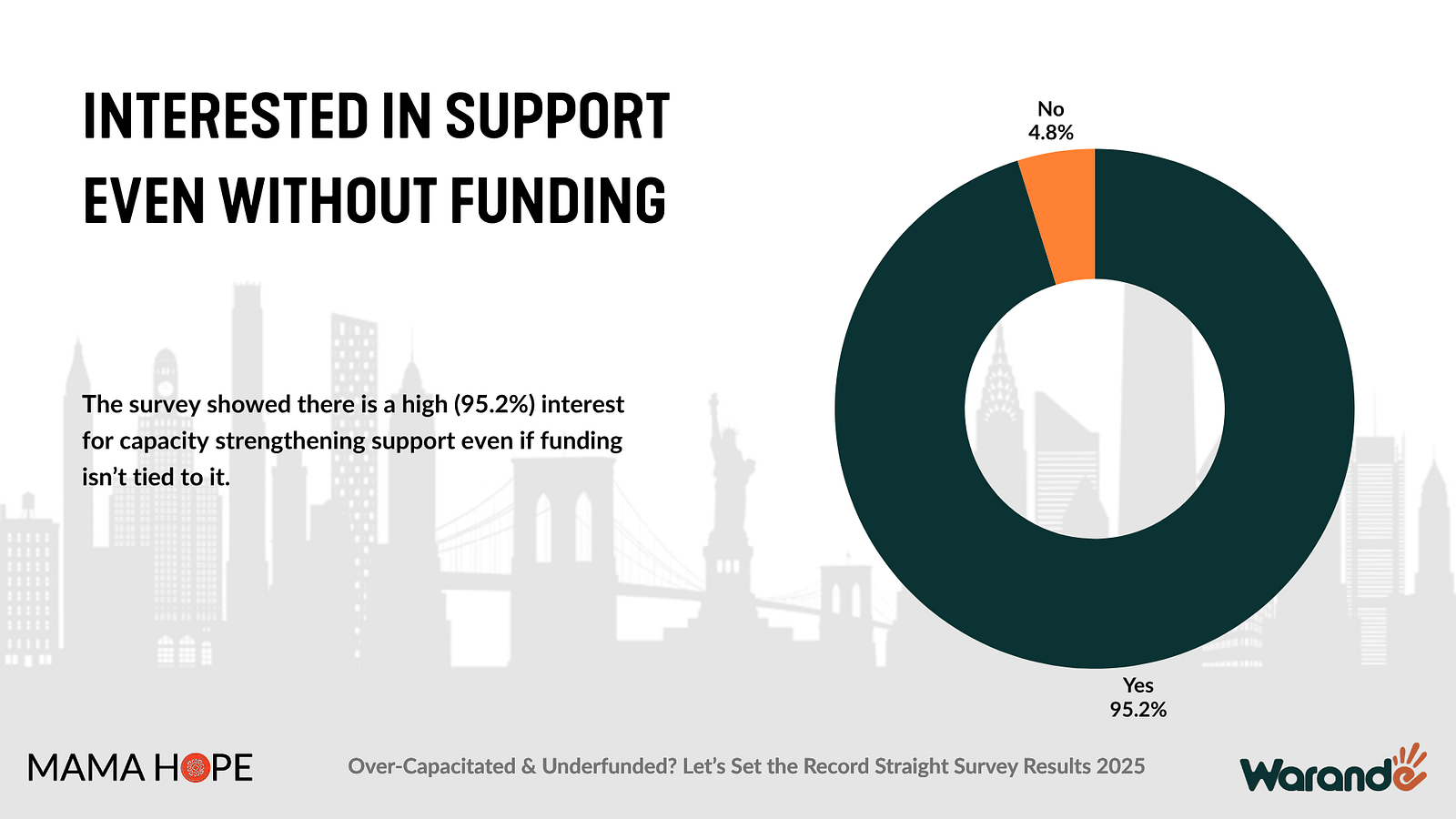
We have found that when an organization builds strong internal structures for itself rather than a funder, they own their future and is far more successful at mobilizing its own resources.
Signal 2: Mapping the Bird-in-Hand
In line with leaving money out of the conversation, during our co-presentation with Blood:Water, we asked: What assets does your organization hold beyond money? Focusing on six (6) segments: Institutional Expertise, Community Relationships, Networks, Physical Infrastructure, Data/Evidence, and Brand/ Reputation.
The responses from 109 participants revealed a goldmine of existing resources that often go unmapped. Under Institutional Expertise, partners identified everything from exceptional research teams and mental health specialists to local knowledge leaders. Their Networks included faith-based groups, government doors at all levels, and alumni associations.
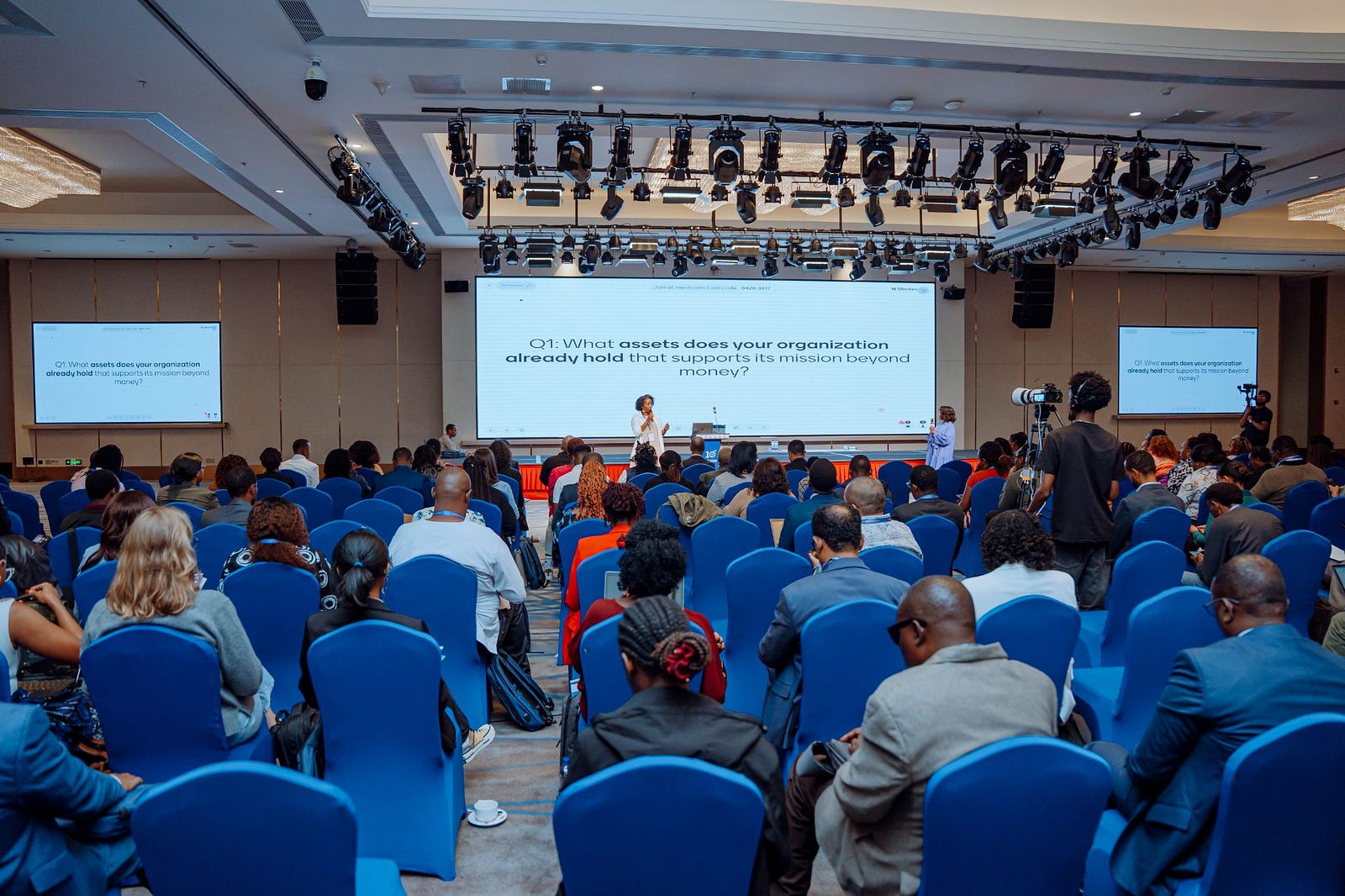
In terms of Physical Infrastructure, the list was granular, from community-owned land, solar tech, processing plants, to rescue vans. Under Data & Evidence, repositories hold years of lived experience stories, impact dashboards, and baseline surveys. In terms of Brand & Reputation are built on constituency trust, reliability, and consistency on the ground. Finally, in the Other category, people listed themselves as leaders, family, and relationships as their assets.
“In our African homes, we understand the true meaning of hospitality. When we expect a visitor, we do not wait for them to bring the meal; we get our house in order first. We clean from top to bottom, dress in our Sunday best, and bring out the finest crockery and cutlery. We prepare a feast with ingredients from our own farms, stores, and community marketplaces, because our dignity lies in our ability to provide. When the visitor arrives with a gift of food, it is never intended to be the meal for the day, but rather to supplement or replace what we have already generously used to welcome them. Yet, when it comes to social impact, we seem to have forgotten this wisdom. We stand at the gate with begging bowls, ignoring the abundance already inside our homes.” Opening Narrative for EAPC’s Workstream 3: The Domestic Capital Paradox: Trillions in Assets, Billions in Remittances, and a Giving Architecture that remains Structurally Undervalued.
As a key takeaway, locally-led organizations still have more work to do in truly mapping these assets with precision. Without knowing what resources we hold, we will forever be holding out a begging bowl and missing the potential of our expertise.
The work both Blood:Water and MAMA HOPE continue to do around Community Asset Mapping supports organizations to turn this existing abundance into institutional infrastructure that can absorb, deploy capital at scale, and be sustainable.
Signal 3: Designing for Doer-Defined Success
I was deeply inspired by Winnie Watera from WomenFirst International Fund, whose presentation felt like looking in a mirror. Success is often an externally authored concept, but we must consider flipping that script by leaning into doer-defined success through designing new models:
Honoring Different Shades of Impact means recognizing that impact looks different across an annual partner portfolio. Currently, we are reworking our MEL (Monitoring, Evaluation, and Learning) framework to define impact as defined by our partners. Allowing for an agile, context-specific partner definition of success. The aim is to ensure we stay true to what we believe localization is: a systems change approach in which human capital, resources, assets, and expertise are invested without conditionalities from external actors, leading to a balance in decision-making powers.
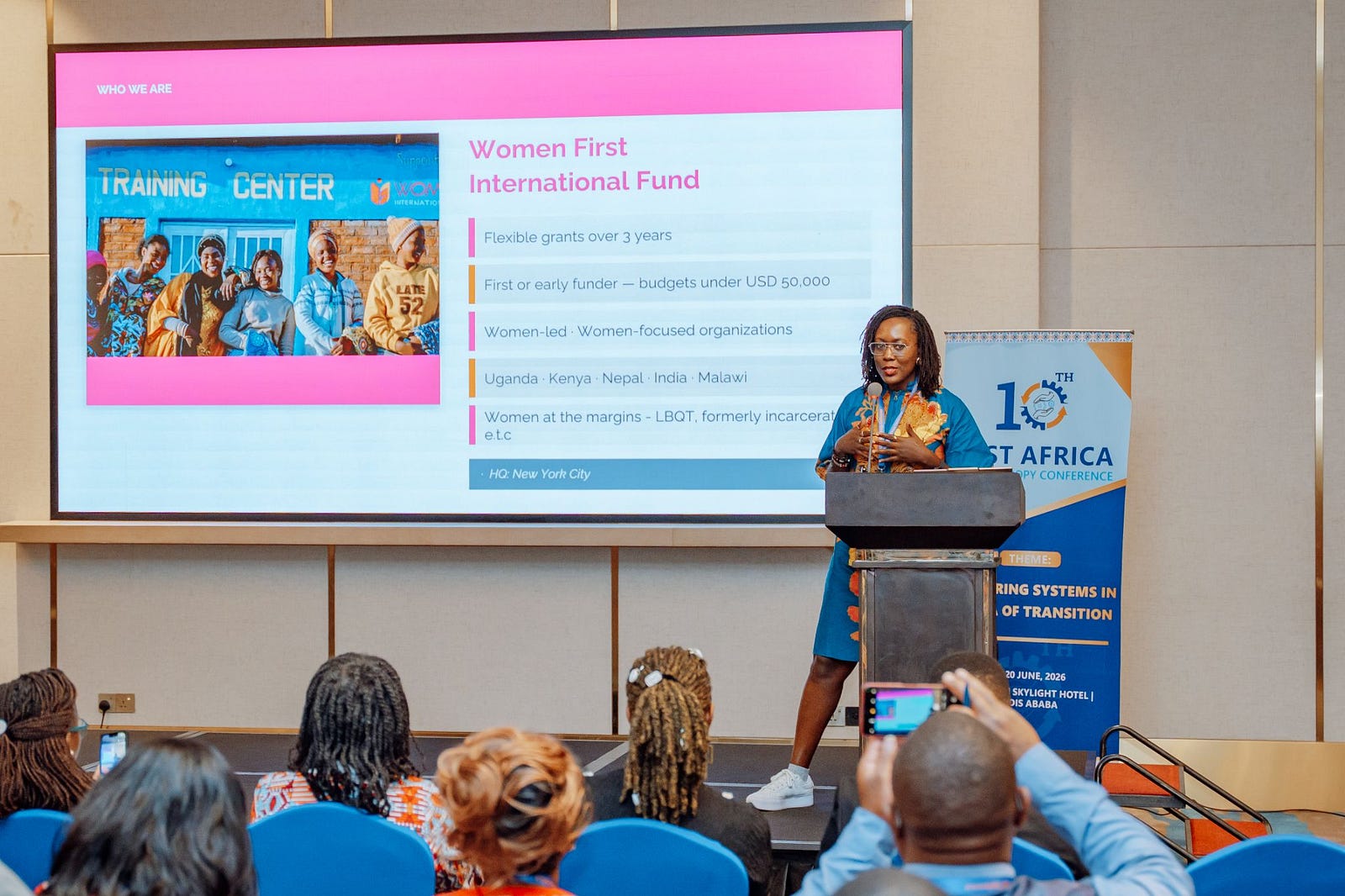
Trust-Based Practices that Scale looks like multi-year unrestricted investments and reduced reporting burden, and these are foundational. When partners have predictable support, they can plan for the long term. Even after the 9-month learning program, we continue to support partners in our alumni network — The Collective. It exists because locally-led organizations deserve a unified voice to advocate for their sustainability, recognition, funding, and power within the global development sector. The goal of The Collective is that, beyond the LDA program, partners can stand independently: confident in their voice, connected in purpose, and are change champions.
Investment Readiness Support is about understanding that we don’t just move money; we are a pre-seed ecosystem builder. Much like the model WomenFirst presented, MAMA HOPE provides investment readiness support that de-risks grassroots organizations, preparing them to access larger pools of values-aligned capital.
Signal 4: Intermediaries are the Ecosystem’s Plumbing
“Intermediaries are the infrastructure between capital and communities. But too often, they are funded as projects, not as institutions. The result is a viability gap. When capital contracts, the institutions closest to communities are often the first exposed — because they were never capitalised as infrastructure.” Harvey Duthie, CEO — Belmont Fundraising
An intermediary for us is an organization that acts as a bridge between funders and locally-led grassroots organizations, facilitating collaboration while recognizing the power both sides bring to the table. Basically, the system depends on intermediaries to reach the grassroots, but it doesn’t just mean we are just a delivery vehicle for funders’ agenda, but that we are an ecosystem enabler. We provide the due diligence, fiduciary management, and system strengthening that allow locally-led organizations to be investment-ready for the new capital landscape.
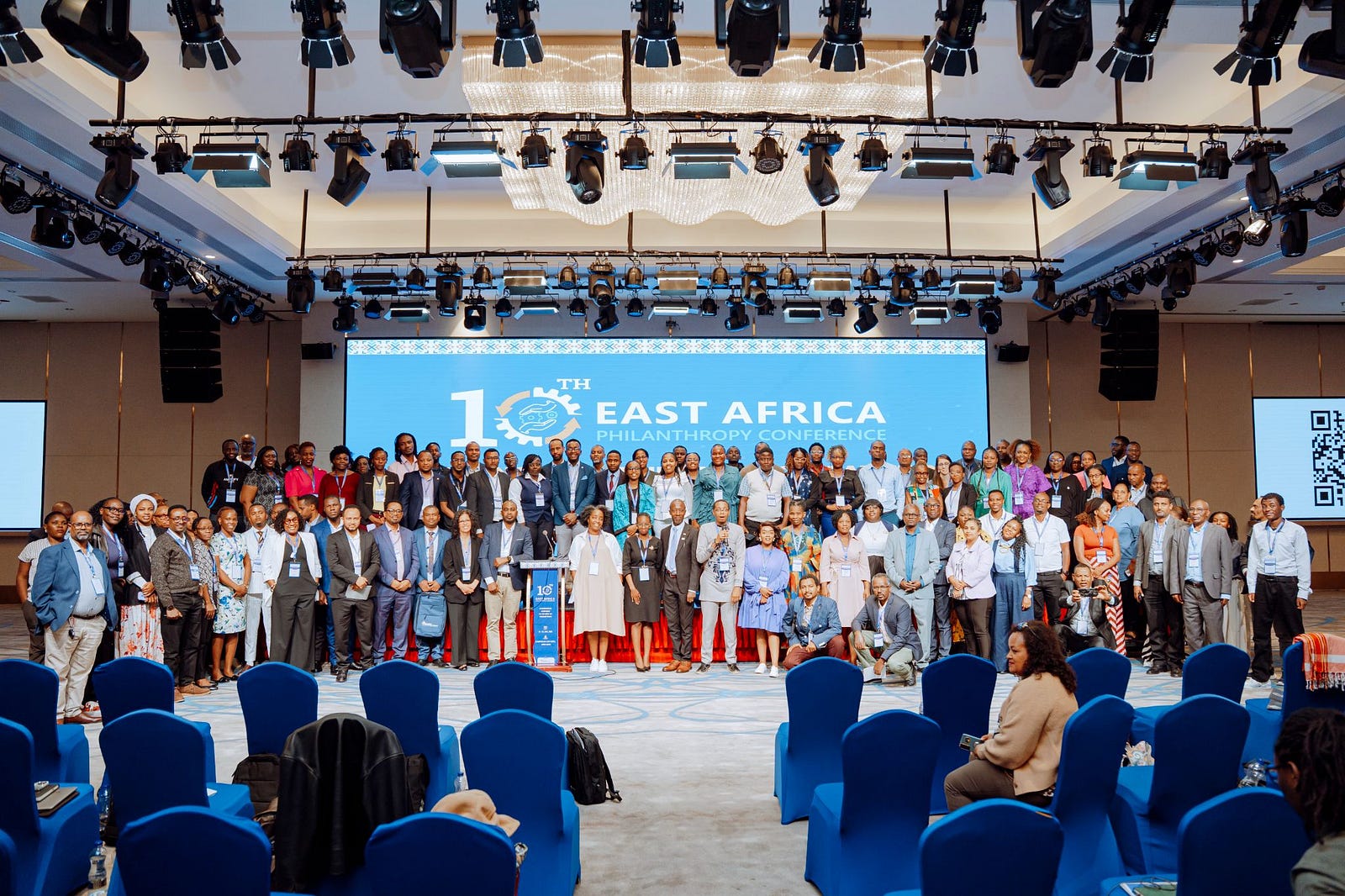
A strong belief we hold at MAMA HOPE, through the LDA program, is to build organizational infrastructure for long-term resilience. The LDA isn’t a program in the sense that most programs are; instead, it’s a system-changing model that seeks to:
- Leave money out of the conversation and talk about building structures
- Believe that the organizations have assets that they can leverage for their own sustainability
- Truly create a trust-based philanthropic landscape by investing without conditionalities. Allowing organizations to define what success looks like to them, not to us as external actors.
For us as an organization, it means we also learn as we teach and continue to build our own systems by asking ourselves the same questions we ask our partners in every cohort: How can we build working systems that align with our vision and mission?
Invest in the Anchor, Not Just the Boat
The 10th EAPC was more than just a series of sessions in another East African capital city. It was a critical inflection point for our sector. Gathering in person pulls us out of our bubbles, reminding us that Africa does not need to wait for permission to lead. We are already leading by designing the institutional infrastructure that the new capital landscape requires.
The real magic of a convening like this happens in the spaces between: coffee breaks, networking lunches, and evening drinks while watching World Cup 2026 — where cross-sector introductions turn into the collaborative partnerships that extend well beyond the hotel walls.
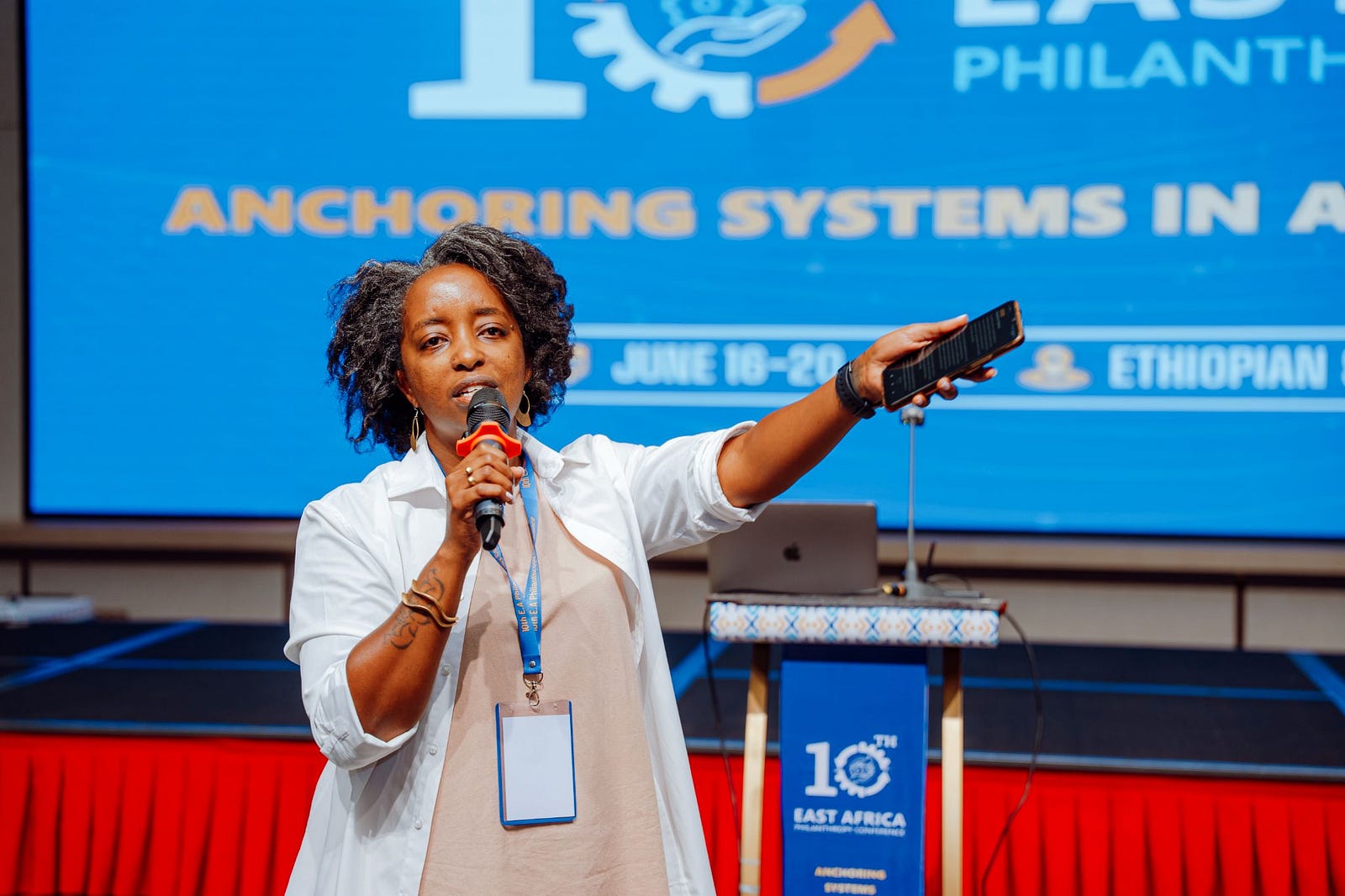
These gatherings provide the rare opportunity to think collectively, disagree productively, and build deliberately. They allow us to stop performing compliance for a moment and start honestly asking: Who do we need to become so that a trust-based future is actually possible?
As we head back to our respective corners of the region, let’s carry the signal with us. We are moving away from an era of prescriptions and into an invitation to design systems that honor our own dignity and expertise.
“Four days from now. Months from now. Years from now. The question will remain the same: Have we built systems that simply deliver resources or systems that allow communities and institutions to sustain change on their own terms?”
Dawit Taddele Dessie, Strategic Initiative and Sustainability, East Africa Philanthropy Network-EAPN
A Call to Partner
To the funders and strategic partners who believe in the future of East Africa: The viability gap is a system, not a community failure. We invite you to work with MAMA HOPE to move beyond 12-month project cycles.
When you support MAMA HOPE, you are investing in the institutional floor (the coordination, the trust-based networks, and the investment-ready systems) that ensure development impact outlasts any single funding cycle.
Projects come and go, but organizations with strengthened, self-owned systems stand the test of time. The aid era is ending by design, so we cannot plan around resources that may not arrive. The opportunity we have in Africa is to be the architects who design and anchor the philanthropic systems that future leaders sit upon to build upon.
Sources and Presenters Referenced:
- The State of the Ecosystem: Philanthropy as a pillar of Domestic Resource Mobilisation (DRM) by Dr. Tendai Murisa, Founder and Executive Director, SIVIO Institute.
- Fundraising Infrastructure & Revenue Architecture by Harvey Duthie, CEO — Belmont Fundraising.
- Funding at the Intersection of Gender & Economic Empowerment by Winnie Watera, Program Officer — Women First International Fund.
- Operationalizing Trust-Based Philanthropy: The Inner Work Behind the Institutional Shift by Sharon Afandi, Equitable Giving Officer — Segal Family Foundation, Lorrie Fair Allen, Chief Program Director — Charlize Theron Africa Outreach Project (CTAOP), and Caroline McCoy Mbuvi, Trust-Based Philanthropy Practitioner.
- Organizational & Community Asset Mapping by Ann Kungu, Director, Africa Partnerships — Blood:Water and Wambui JL, Director, Communications and Advocacy — MAMA HOPE.
- The Addis Commitment: Rethinking Philanthropic Systems by Dawit Taddele Dessie, Strategic Initiative and Sustainability, East Africa Philanthropy Network (EAPN).