Understanding the Depth of African Philanthropy by Sara Swett.
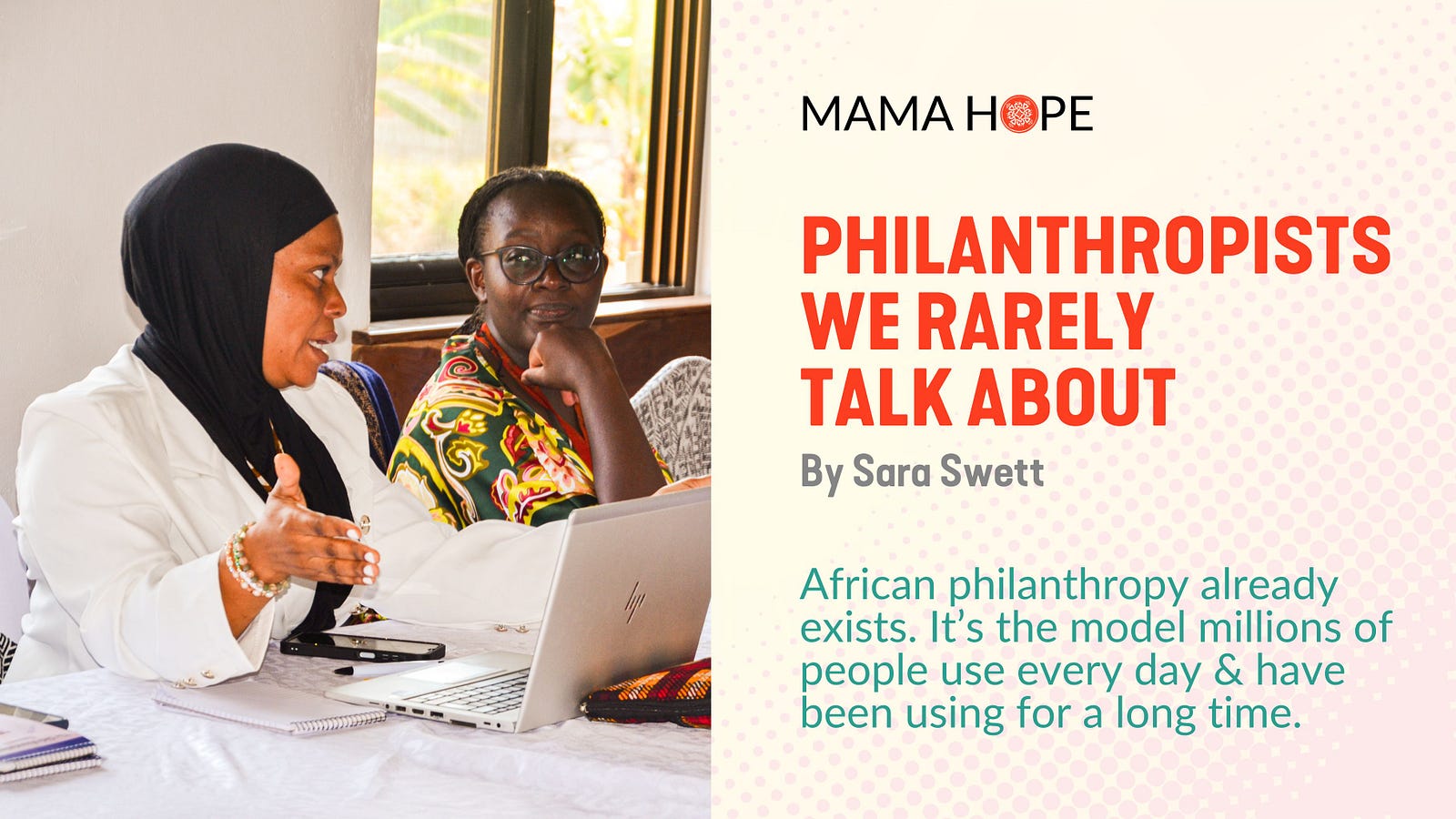
African philanthropy isn’t waiting to be built. It already exists. It is the model millions of people use every day and have been using for a long time.
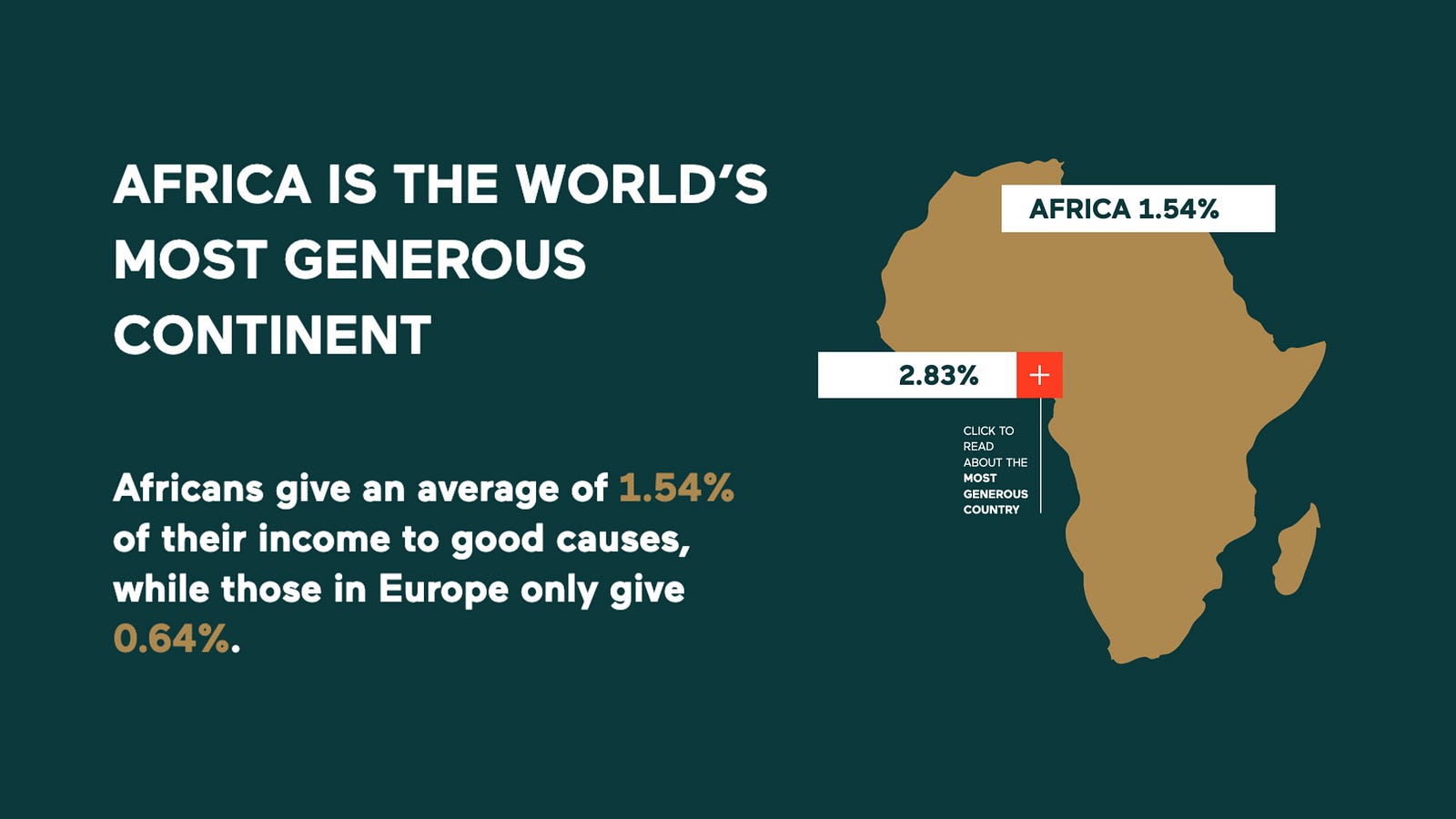
The 2024 World Giving Report names Africa the most charitable continent, with 72% of people giving regularly. The global majority of countries give away the largest share of their earnings at an average of 1.45% (Uganda: 2.04%; Malawi: 1.80%; and Tanzania: 1.69%).
According to World Bank data published in 2024, remittance inflows into and within Africa are estimated at US$95 billion, amounting to about 5.2% of Africa’s total GDP (WB). Remittances have surpassed foreign aid globally for years, and in Africa, remittances are often 2x to 3x larger than Official Development Assistance (ODA), a.k.a. ‘aid’ in many countries. That means families receive more through person-to-person transfers than through formal development assistance.
Most of this support doesn’t move through institutions at all; it goes straight to the people who need it. To the needs of individuals themselves, from community members to other community members. The most active, relevant, and reliable givers are not foundations or big international donors. They are friends, relatives, neighbors, church groups, and savings circles.
They’re the people who send a quick M-Pesa (mobile money) transfer late at night because a relative needs medicine. They’re the ones who help a neighbor replace a jembe (hand plow) so he can keep farming. They’re the church groups that gather bricks, water, cement, and cash until a whole building is constructed for the community to gather.
Yet when philanthropy is discussed in global spaces, the spotlight rarely lands on Africans themselves.
Africans Are All Funders!
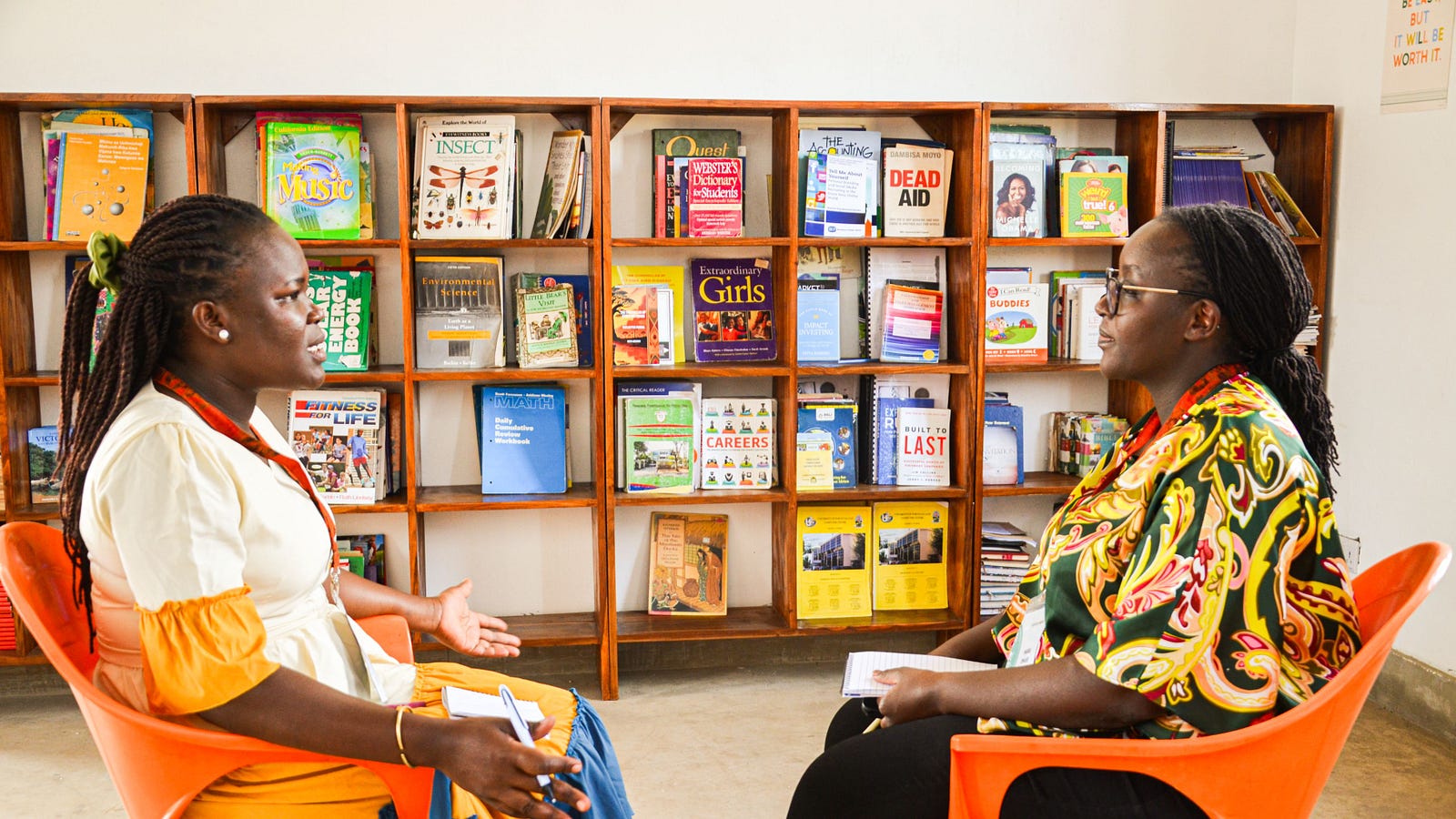
At our most recent 2-day boot camp for 37 of Arthur B. Schultz Foundation’s (ABSF) East African partners, we kick-started the fundraising session by asking our participants the following questions:
- Who has received a call from a family member or friend asking for money in the past three months? Every hand went up.
- Who has sent money to someone they know in the past three months? Every hand again.
- Who gave more than $100? More than half the room.
The leaders went on to share the reasons they give, the boundaries they set, and the way they decide who to send money to. Their answers painted an impressive picture that global philanthropy largely overlooks.
“My church held a fundraiser for a new building. Everyone in the community donated all different items: from bricks and cement, to buckets of water, and cash. We came together, and over a year, we built a new church.”
“If someone calls me and asks for money today, I don’t give it immediately because I need time to know what it’s for and to prepare.”
“I need to see the impact that my support will have on someone. For example, if I give you money for a business, will you actually build a business that is profitable? If every time I give you money, you spend it poorly, I won’t keep giving you money.”
“I check in on the people I give to, to see if they’ve achieved their goals, how the children are doing in school, and what else I can do besides money that might help me, as their neighbor, friend, and family.”
“Sometimes, if someone I don’t know or trust well asks for money and I want to help, especially with construction. I ask another friend to look over how the money is being used, or how the build is going. That way I can keep track.”
A Narrative Shift
Halfway through the session, something shifted in the room. The group didn’t need explanations on how funders think; they had demonstrated it themselves. The narrative that Africans must and can only receive funding from Western countries has dissipated. The realization that we have been supporting each other all along, raising children, providing healthcare and education, building structures and communities, grew.
When we asked participants to describe their own ‘funding criteria’, the themes that mattered came out:
- Relationships: Trust and consistent communication shape who gets funded.
- A Clear Purpose: Suddenly, vague asks usually fall flat.
- Shared Networks: If you can’t help, you connect someone who can.
- Planning: Many people keep personal budgets.
- Intermediaries: A trusted middleman helps build trust.
- Impact: People want to see that their money makes a difference.
- Sustainability: Gifts that change long-term outcomes are prioritized.
- Due Diligence: People verify stories, intentions, and needs of those they give to.
- Breaking Cycles: Funding is more likely when it lifts someone out of a repeating problem and out of poverty.
- Capacity Strengthening: People fund education, training, and even coach their peers to help them reach their goals.
Through these discussions, everyone in the room began to see the obvious truth: Everyone there was already a philanthropist. Everyone was a funder. Everyone was a fundraiser.
A recognition that changed the rest of the conversation and training.
This perspective draws on research from:
- The Trust-Based Philanthropy Project
- OECD Development Co-operation Reports
- The Global Fund for Community Foundations (#ShiftThePower).
The data shows that unrestricted, relationship-centered funding consistently outperforms traditional grant-making, which is exactly the approach African communities have practiced long before it was recognized as such.
Early-stage nonprofits in East Africa are already modeling the kind of giving the international philanthropic community claims to value: trust-based, direct, and anchored in lived experience.
What Does This All Mean?
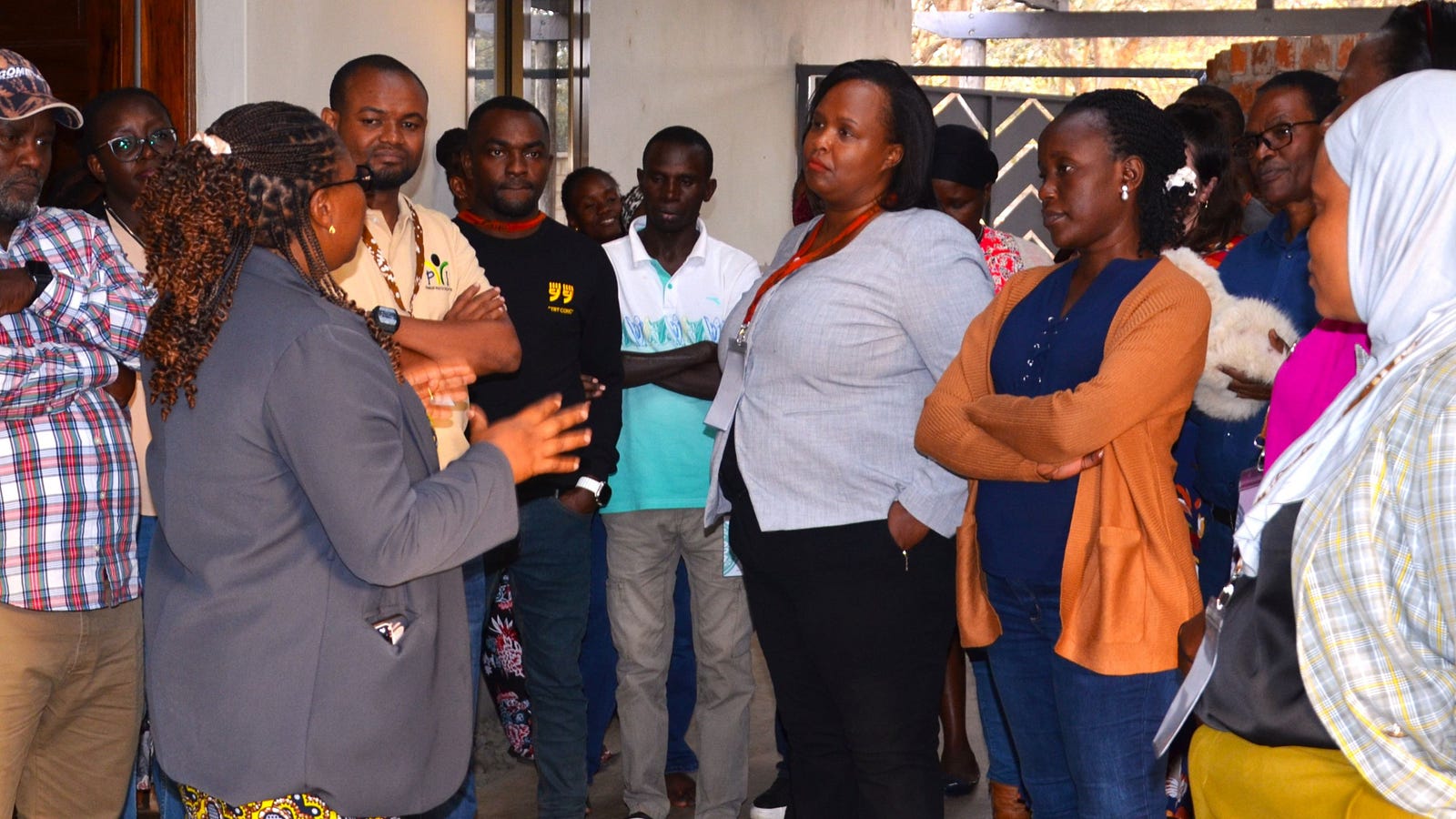
If African philanthropy is this structured, this relational, this widespread, the common narratives about “aid” start to look off-key. “Aid” and “development” funding often erases these systems of care Africans sustain and underestimate the strategy that drives African giving. If people thrive most when support reaches them directly, the question becomes simple: why aren’t funders doing the same?
The real shift that needs to happen is for international philanthropy to step inside these systems and cultures of giving instead of asking leaders to operate outside what supports their communities and goals the best. Unrestricted grants, supported with capacity strengthening, are still the most practical way to equip early-and mid-stage organizations.
It is also our responsibility to bring these learnings forward and ensure East African voices shape how resources are distributed on the continent and beyond. Africans excel at directing resources where it matters most. Locally-led organisations struggle not because of a lack of capacity, but because donor systems often ignore how giving truly works on the ground.
Africa is already leading in generosity.
The question now is whether global philanthropy is willing to learn from the people who’ve been practicing it all along.
About the Author: For the last decade, Sara Swett has lived, worked, built her life, and family in Tanzania. Her career focuses deeply on channeling funding to nonprofits in East & West Africa. Sara runs Tandaa Advisors and consults with MAMA HOPE as a Fundraising Strategist & Trainer for the Localization Development Accelerator (LDA) program and Boot Camps.